

“It turns over, but it won’t start” is one of the most useful descriptions a driver can give. It tells you the starter is engaging and the engine is rotating. That is different from a silent no-start, a single click, or a slow labored crank. It does not identify one failed part, but it narrows the first conversation considerably.
A gasoline or diesel engine needs the right conditions to run, including enough electrical power, the correct fuel delivery, a working ignition or injection system, accurate timing, and the mechanical ability to compress and burn the mixture. The safest goal at home is not to prove which one failed. It is to notice the pattern, avoid making the situation worse, and give the mechanic a clear starting point.
First, make sure it is truly a crank-no-start
Listen to one short starting attempt. A true crank-no-start usually sounds like the engine is spinning at a steady speed: the familiar “rrr-rrr-rrr” sound, but it never fires and runs. The dash may light up normally. Headlights may be bright. That differs from a weak, dragging crank, rapid clicking, one heavy click, or no response at all.
This distinction matters because the starting system has already done part of its job. AAA separates slow cranking, clicking, and a normal crank in its guide to common no-start symptoms. A normal crank does not automatically rule out a weak battery or poor cable connection, but it means a technician should not stop there. Fuel, spark, sensors, air, and mechanical timing are all still part of the picture.
Notice the details before you try again
One careful look is more useful than ten repeated starts. Check whether the dashboard behaves normally, whether the security or key light stays on, and whether you see a warning message. Notice if the engine cranks at its usual speed or sounds unusually fast, uneven, or as if it almost catches. If it starts for a second and dies, that is different from never trying to fire at all.
Then think about when the trouble began. Did the vehicle die while driving? Did it run normally the day before and fail after sitting overnight? Did this follow a fuel stop, a recent repair, heavy rain, a jump start, or a battery change? Is the tank very low? Did it have rough running, a warning light, long cranking, or a loss of power beforehand? The timeline helps a technician decide which systems deserve attention first.
Start with simple, safe observations
Before opening the hood, put the vehicle in park or neutral, set the parking brake, and make sure it is in a safe place. Look at the fuel gauge, but do not rely on it alone if the vehicle has been parked at an angle or has a known gauge issue. If it is safe and you are familiar with the car, check the owner’s manual for a fuel-pump fuse or relay location. Do not replace a fuse simply because it looks suspicious or because another fuse fits.
Some vehicles have a key-fob backup procedure when the fob battery is weak. Others can prevent starting when an immobilizer or security system does not recognize the key. The owner’s manual is the right source for your model’s procedure. If the dash shows a key or security warning, share that exact message rather than assuming it is a fuel or ignition failure.
If the battery case is swollen, cracked, leaking, or hot, stop. The same goes for smoke, a burning smell, fresh fuel leaking under the car, exposed wiring, or damage from a collision or rodent activity. Those are reasons to arrange help, not reasons to keep cranking.
Fuel delivery can leave an engine cranking with no start
An engine needs fuel at the right pressure and at the right time. A low or empty tank, a weak pump, a pump relay or fuse issue, a restricted filter on a vehicle that uses one, damaged wiring, or an injection problem can all produce a crank-no-start symptom. A fuel smell does not confirm the diagnosis, and the absence of a sound from the rear of the car does not conclusively condemn a pump. Modern vehicles vary too much for that kind of shortcut.
What is useful is the story around the symptom. If the vehicle sputtered, lost power, stalled, or became hard to start before it quit, fuel delivery belongs in the diagnostic conversation. NHTSA service guidance for crank-no-start fuel concerns emphasizes checking the actual condition, including fuel level and pressure, before replacing a pump. That principle holds up well: testing is more valuable than swapping expensive parts.

Ignition, sensors, and engine information matter too
On a gasoline vehicle, the engine also needs spark at the right moment. Ignition coils, plugs, wiring, crankshaft and camshaft sensors, control modules, and related circuits can affect that process. On modern vehicles, sensor information tells the computer when and how to deliver fuel and spark. A failed signal can leave the engine cranking normally while the system never commands what it needs to start.
That is why a diagnostic trouble code can be helpful but is not a full answer on its own. A code identifies a circuit or condition worth testing. It does not always say which part caused the problem. A professional diagnosis may combine scan data with voltage checks, connection checks, spark or injector testing, and information about the way the fault occurred. The goal is to find the cause, not simply the first code on the screen.
Do not overlook battery voltage and connections
A battery can be strong enough to make the starter spin and still have a voltage or connection problem that affects electronics during cranking. Loose or corroded terminals, a weak battery, damaged grounds, or a charging-system problem can create confusing symptoms. If the crank slows down, the dash dims dramatically, or the vehicle changes behavior after a jump, report that. It may be a key piece of the diagnosis.
AAA notes that a car that starts after a jump but soon goes dead again may have more than a discharged battery. The battery, charging system, cables, and the reason the battery lost charge need to be considered together. For a car with no dashboard lights at all, see the related no-dashboard-lights guide, which covers that distinctly different symptom.

Mechanical timing and compression are less common, but important
An engine also needs enough compression and correct valve timing to run. A broken timing belt or chain, a severe mechanical failure, or a compression problem can cause a crank-no-start condition. These are not driveway checks. An engine that suddenly stopped while driving, cranks unusually fast, makes a new harsh noise, or has a known timing-belt concern deserves prompt professional attention.
Do not keep cranking an engine that makes grinding, banging, or metal-on-metal sounds. More attempts can create more damage. The sensible next step is to stop, note exactly what happened, and arrange an assessment. A technician can decide whether a scan, mechanical inspection, timing check, or compression test is appropriate for the vehicle.
What not to do
Repeated long cranking is rarely productive. It can drain the battery and overheat the starter while hiding the original symptom. Avoid spraying starting fluid into a modern fuel-injected engine unless a qualified professional directs you to do so. Do not strike the fuel tank, force a relay, bridge terminals with a tool, bypass fuses, or substitute a larger fuse. Those shortcuts can create a safety issue or damage a circuit that was otherwise repairable.
Be especially careful with hybrids and electric vehicles. They still use a 12-volt system for many functions, but their high-voltage systems have different safety requirements. NHTSA explains that a high-voltage battery is not something to jump-start. Use the owner’s manual and the manufacturer’s guidance for the specific vehicle instead of treating it like a conventional gasoline car.
A practical checklist for the service call
- Vehicle details: year, make, model, engine if known, and whether it is gas, diesel, hybrid, or electric.
- Exact symptom: normal crank, slow crank, click, no sound, starts and dies, or no dash power.
- What happened first: stalled while driving, failed after sitting, failed after a fuel stop, or followed a warning light or recent work.
- What the dash shows: security light, warning message, check-engine light, or anything unusual during the start attempt.
- Where it is parked: home, work, parking lot, roadside, or another place with limited access.
A brief video of the start attempt can help if it is safe to make. It preserves the sound and dash behavior for a mechanic, especially when an intermittent fault disappears later. Keep the recording simple and do not stand in traffic or near moving vehicles to get it.
How Stone can help with a crank-no-start
Stone Mobile Mechanic can start with the symptom and the vehicle’s location, then help determine whether a mobile visit makes sense. For a battery concern, review mobile battery replacement. When the cause is not clear, mobile diagnostics and electrical service gives the problem a better starting point than guessing at parts. If the vehicle is stranded and needs immediate attention, the roadside repair service page explains the practical options.
Stone serves drivers, work vehicles, trailers, and equipment across the Sacramento service area. Share what the engine does, what happened before it stopped starting, and where it is parked. That is enough to begin a focused conversation and avoid sending you down the wrong repair path.
When to stop and arrange help
Stop trying to start the vehicle if you smell fuel or burning, see smoke, find a swollen or leaking battery, see damaged wiring, or hear a new harsh mechanical noise. Also stop if the vehicle died while driving, if it is in an unsafe location, or if a proper jump attempt does not change the symptom. A crank-no-start can be straightforward, but it is not a one-part diagnosis.
The best first move is simple: make one careful observation, write down the details, and let the vehicle’s symptom guide the next test. That protects the car, makes the service call more useful, and avoids buying parts based on a guess.
Need a clear next step?
Tell Stone what the engine does.
Share the vehicle, location, and whether it cranks, clicks, starts and dies, or stays completely silent. You can discuss the right next step before work begins.
Frequently asked questions
Can a bad battery make an engine crank but not start?
It can. A battery may have enough power to turn the engine but still drop voltage under load, especially if it is weak or connections are poor. A normal-sounding crank also makes fuel, ignition, sensor, and mechanical checks important, so a battery should be tested rather than guessed at.
Why does my car crank but not start after sitting?
The timing matters. A vehicle that has been parked may have a low battery, stale fuel, a poor connection, or an intermittent issue that did not show up while it was being driven. The make, model, weather, fuel level, warning lights, and whether it starts after a jump are useful details for diagnosis.
Should I keep trying to start a car that cranks but will not fire?
No. A couple of short, normal attempts are enough to identify the symptom. Repeated long cranking can drain the battery and add stress to the starter. Stop immediately if there is smoke, a burning smell, fuel leaking, or an unusual mechanical noise.
Related posts
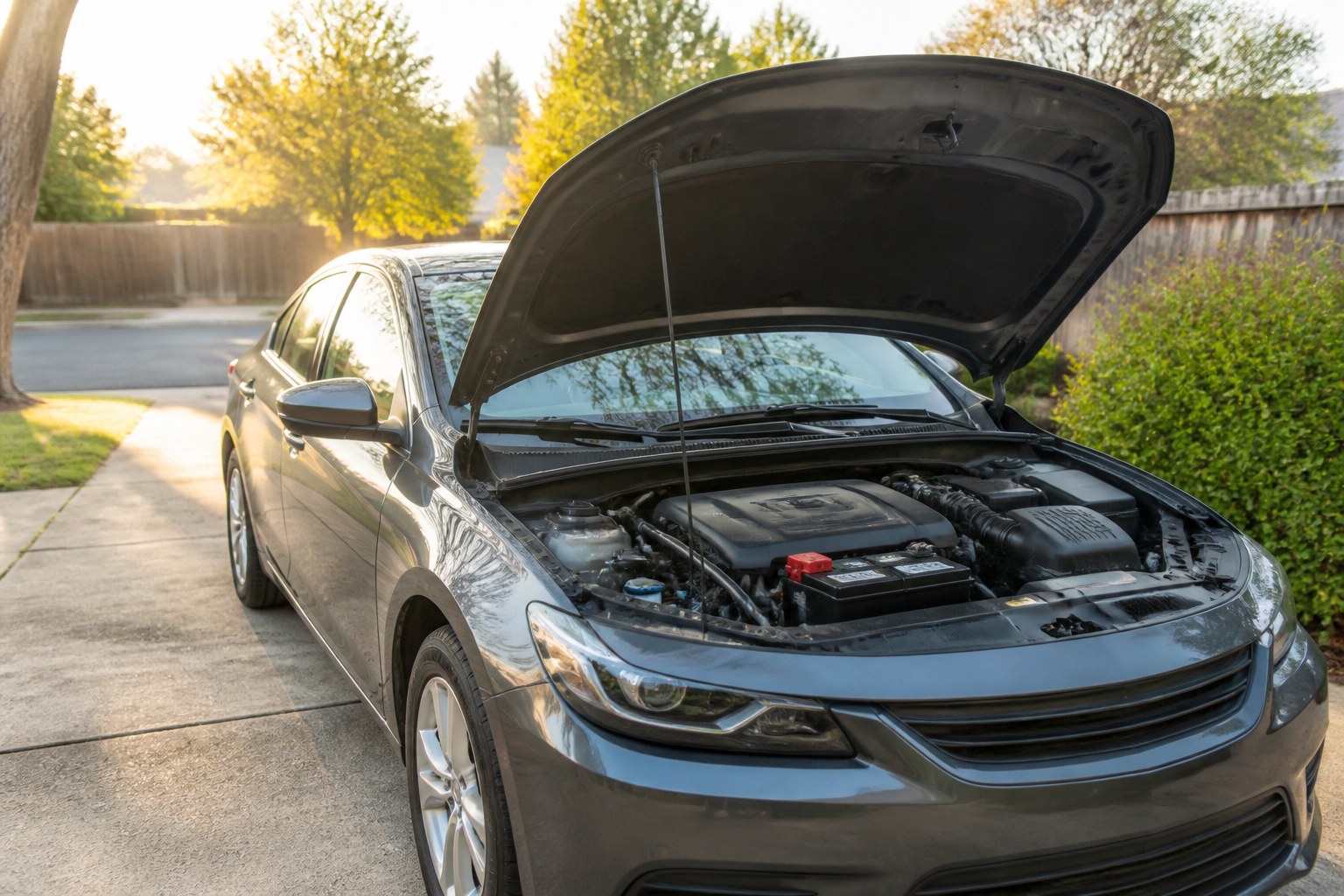
Starting trouble
Why Won’t My Car Start? What to Check First
Learn how clicks, slow cranking, and normal cranking point to different next steps.
Read the guide →
Electrical power
No Dashboard Lights and Car Won’t Start
Start with safe checks when the dash stays dark and the car has no power.
Read the guide →