
A car that needs a jump once can have a simple explanation. A car that needs a jump again a day or two later needs a clearer look. The battery may be worn out, but it may also be undercharged, poorly connected, or losing power after the vehicle is shut off. Replacing the battery before understanding the pattern can leave you with the same problem and a lighter wallet.
The good news is that the timing gives useful clues. A battery that goes dead after a few short trips is a different story from one that dies after sitting overnight. A battery warning light while driving is different again. You do not need to take the car apart to make a helpful observation. A few safe details can make diagnosis much more focused.
Start with the pattern, not a guess
Think about when the vehicle last ran normally and when it would not start. Did it die the next morning, after a weekend, or after sitting for several weeks? Did it crank slowly, click once, or have no electrical power at all? Did it start with a jump and then run normally for the rest of the day? Did the battery light come on while the engine was running?
Also note what changed recently. A new dash camera, phone charger, trailer connection, audio equipment, remote starter, battery replacement, repair, or long stretch of very short trips can matter. So can a door, trunk, glove box, or hood that does not latch fully. The goal is not to pick a culprit from the list. It is to give the technician a useful timeline.
A worn or weak battery may not hold enough reserve
Every 12-volt battery loses capacity with age and use. It can still show enough voltage to light the dash, yet not have enough reserve to turn the starter after sitting. Heat, deep discharge, corrosion, and repeated short trips can shorten its useful life. Cold weather can make an existing weakness more obvious because the engine needs more starting power while the battery delivers less.
A battery test is more useful than judging it by age alone. The right battery also needs to match the vehicle’s specifications. Chevrolet notes in its battery care guidance that installing a battery with more cold-cranking amps than the vehicle calls for does not make the vehicle start faster. Correct fit, condition, and charging are what matter.
If a battery is swollen, leaking, hot, cracked, or smells like rotten eggs, do not keep charging or jump-starting it. Step away from the vehicle and arrange help. A damaged battery can be a safety problem, not just a no-start inconvenience.
Loose or corroded connections can mimic a bad battery
Starting current has to travel through the battery terminals, cables, and grounds. A loose clamp, corroded terminal, damaged cable, or poor ground can add resistance and make a good battery look weak. You may notice intermittent starting, headlights that dim while cranking, a battery that seems fine after a cable is moved, or a problem that gets worse in damp weather.
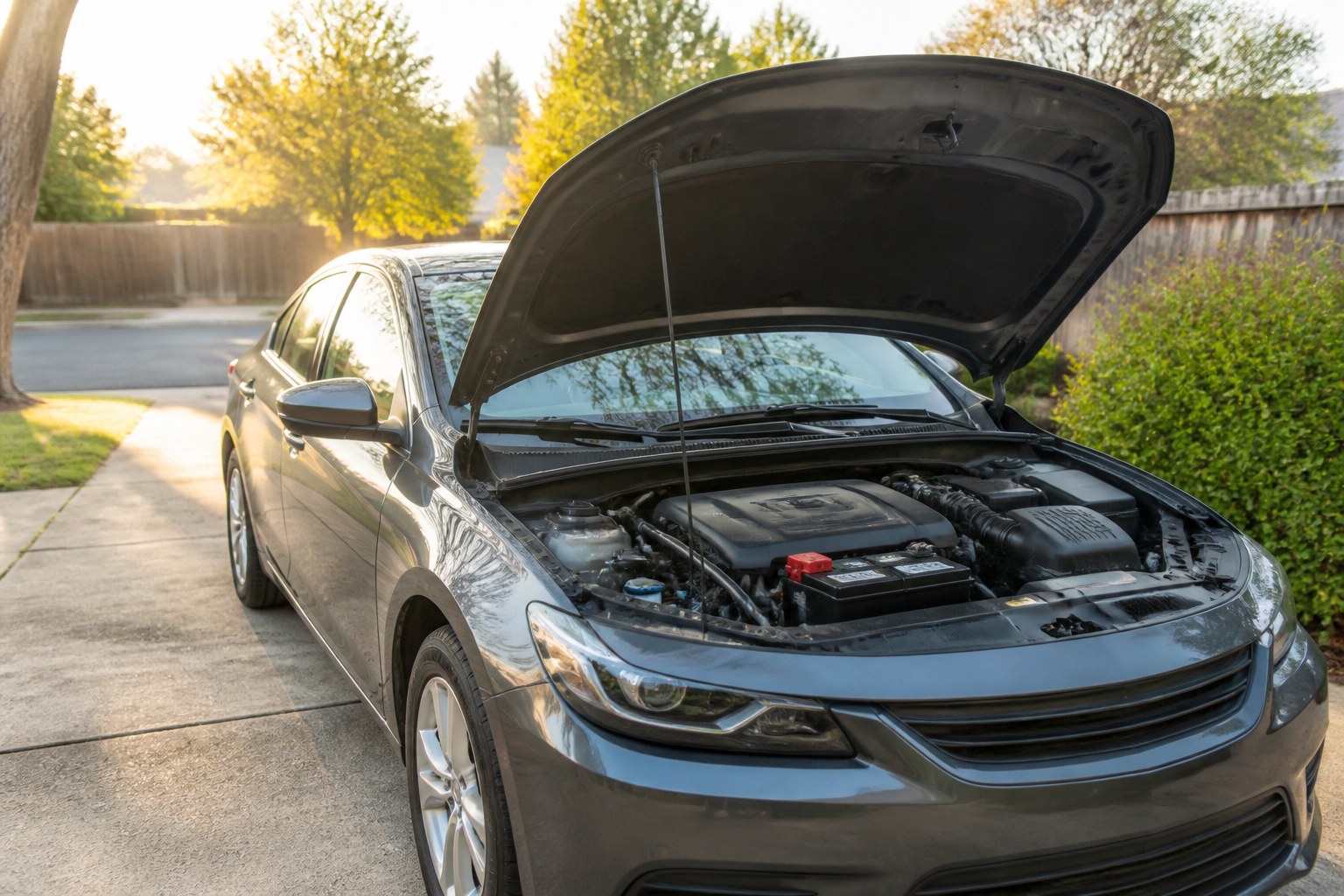
With the engine off, look for obvious white, blue, or green buildup, a visibly loose terminal, damaged insulation, or a cable that has been rubbed or pinched. Do not bridge terminals with a tool, and do not force a seized clamp. Modern cars can have battery sensors and delicate electronics near the battery, so a basic inspection is the safe limit for most drivers.

The alternator and charging system matter after the engine starts
The battery starts the vehicle, then the charging system should restore the energy used for starting and run the electrical system while you drive. If the alternator, belt, wiring, voltage regulator, or connection is not doing its job, a healthy battery can become undercharged again and again.
A battery warning light while the engine is running is a reason to pay attention. It often means the charging system needs testing, not that the battery itself is automatically bad. Dim lights, electrical accessories acting strangely, a burning smell, or a vehicle that stalls after the warning light appears are reasons to stop in a safe place and arrange an assessment rather than trying to drive farther.
Do not test an alternator by disconnecting a battery cable while the engine is running. That old shortcut can create voltage spikes and damage modern electronics. A proper test checks the battery, charging output, cable condition, and the symptom together.
Short trips and long parking stretches can leave a battery undercharged
A vehicle that makes repeated short trips may not have enough running time to replace the energy used to start it, especially if the battery is older or accessories are used heavily. A car that sits for weeks can also lose charge naturally, and a weak battery may not recover well. Interstate Batteries notes that a vehicle left unused for a long period can eventually discharge, especially when the battery is older.
That does not mean every battery needs a random long drive. A single drive cannot repair a worn battery or fix a charging fault. It does mean the vehicle’s routine is part of the diagnosis. Tell the technician whether it is a daily driver, a work vehicle that idles, a weekend car, or a vehicle that has been sitting.
Power can keep leaving the battery after the car is parked
Modern vehicles use a small amount of power when they are off for clocks, security systems, keyless entry, and control modules. That is normal. The concern is an excessive draw, often called a parasitic draw, that keeps using power after the vehicle should have gone to sleep.
The cause can be as simple as an interior, trunk, or glove-box light staying on. It can also involve an accessory, relay, module, charging port, aftermarket device, or a system that does not enter sleep mode. Technical guidance published through NHTSA shows why this diagnosis takes patience: vehicle systems can remain active for a normal power-down period, and opening doors or moving fuses at the wrong time can wake them back up. A meaningful test has to match the vehicle’s normal parked condition.
Before a diagnosis, remove unplugged-phone chargers and obvious accessories, make sure doors, trunk, and hood latch, and note where the keys are stored overnight. Do not start pulling fuses one at a time at home. On many newer vehicles, that can change the condition you are trying to measure.

Why a new battery can still go dead
A replacement battery solves only one possible cause. If the old battery was discharged because the alternator was not replenishing it, a cable connection was poor, or a parked electrical draw was present, the new battery can lose charge for the same reason. A fresh battery may hide the problem briefly because it begins with more reserve, then leave you stranded again once that reserve is used.
This is especially frustrating after a battery has been replaced recently. Instead of assuming the new part is defective, start with the sequence of events. Did the first battery fail after a warning light? Did the vehicle start normally until it sat overnight? Did the trouble begin after an accessory was installed or after collision, water, or rodent damage? The answer helps separate a battery that cannot hold charge from a vehicle that is not charging or sleeping normally.
A technician can test battery condition and charging performance before deciding whether a parked-current test is needed. That order matters. An undercharged or failing battery can produce misleading electrical symptoms, and a draw test done before the vehicle settles down can point in the wrong direction. The objective is a trustworthy answer, not a stack of parts guesses.
Do not turn a temporary jump into a routine
Repeated jump-starts can be hard on a weak battery and can mask the original clue. If a jump gets the car running, note whether the battery light stays off, how it drives, and how long it takes before the next no-start. Avoid relying on a jump pack every morning, even if the vehicle seems to recover after a drive. That pattern is useful evidence, but it is also a sign the system needs attention.
Keep the jump pack and cables connected only as the manufacturer directs. Never connect to a damaged, leaking, or hot battery, and do not use a charger or booster inside a closed vehicle area where ventilation is poor. If the vehicle is hybrid or electric, follow the owner’s manual for its 12-volt jump points and procedures. The high-voltage system is not a do-it-yourself starting system.

What to do when the battery is dead today
First, make sure the vehicle is in a safe place. If there is smoke, heat, a leaking or swollen battery, damaged wiring, or a strong sulfur smell, stop and arrange help. If the battery simply appears discharged and the vehicle manufacturer allows it, follow the owner’s manual for a jump-start. Keep sparks, flames, and metal tools away from the battery.
A jump-start is a temporary way to get moving. It does not tell you why the battery died. If the car starts and the battery light stays on, or the vehicle dies again quickly, avoid repeated attempts. For a fully dark dash or no electrical power, the no-dashboard-lights guide explains the safe first observations. If the engine turns normally but never fires, that is a different symptom covered in the crank-no-start guide.
Details worth sharing for a faster diagnosis
- How long it sat: overnight, a few days, a week, or longer.
- What it does now: slow crank, clicking, no dash power, starts after a jump, or runs and then dies.
- Battery history: approximate age, recent replacement, recent jump-starts, or a known warranty.
- What changed: new accessories, recent repairs, warning lights, water exposure, or a period of non-use.
- Where it is parked: home, work, a garage, roadside, or somewhere with limited access.
A photo of the battery and terminals can help, as can a short video of the dash and starting attempt. Keep it simple and safe. The evidence matters more than trying several risky fixes.
How Stone can help with a battery that keeps dying
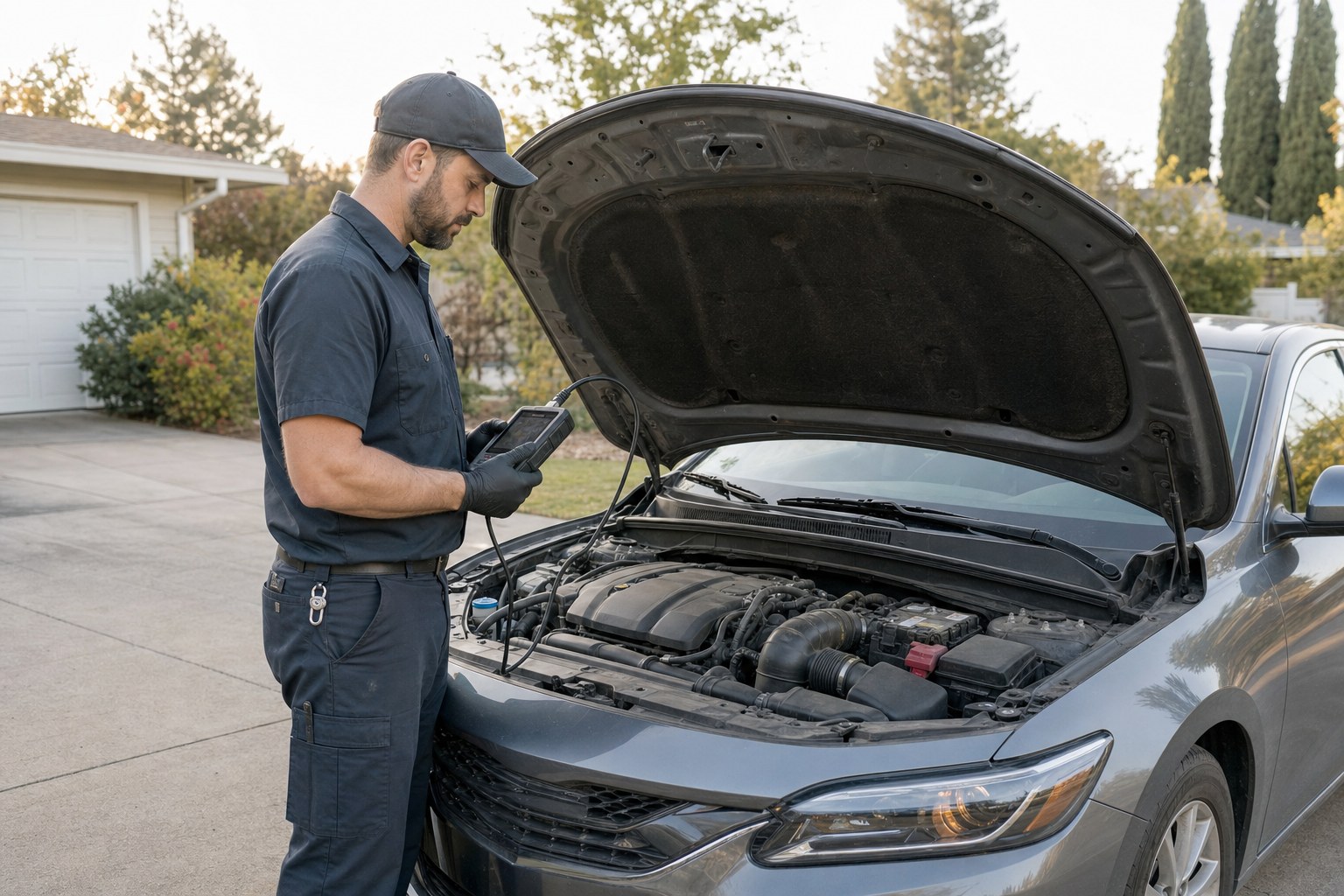
Stone Mobile Mechanic can start with the pattern, the vehicle details, and where it is parked. A mobile battery replacement visit can include the practical checks needed to avoid replacing a battery blindly. When the issue is not clear, mobile diagnostics and electrical service gives the battery, charging system, terminals, and parked draw a more useful starting point.
Stone serves drivers, work vehicles, trailers, and equipment across the Sacramento service area. Share whether the battery dies overnight, after driving, or after sitting for several days. That small detail can keep the next step focused.
The practical bottom line
A battery that keeps dying is not automatically a battery-replacement problem. It can be the battery itself, the connections, the charging system, the way the vehicle is used, or power that keeps leaving after it is parked. The right fix starts with the pattern and a real test.
If you have had to jump the vehicle more than once, do not let the problem turn into a repeated routine. Record what happens, avoid risky shortcuts, and arrange a diagnosis before the next dead battery strands you somewhere inconvenient.
Battery dead again?
Start with the pattern.
Share the vehicle, its location, and whether the battery dies overnight, after driving, or after sitting. That gives the next conversation a useful starting point.
Frequently asked questions
Why does my car battery keep dying overnight?
A weak battery may no longer have enough reserve to sit overnight, or something may be using more power than it should after the vehicle is parked. A charging-system issue, loose or corroded connections, a light left on, or an accessory that keeps a vehicle system awake can also be involved. The timing and pattern help narrow it down.
Will driving the car recharge a dead battery?
A drive may put some charge back, but it does not prove the battery is healthy or solve the reason it went dead. If the battery is weak, the alternator is not charging correctly, or the vehicle has an electrical draw while parked, the same problem can return. A proper battery and charging-system test is more useful than repeated jump-starts.
Can a bad alternator make a battery die overnight?
It can contribute. The alternator is responsible for recharging the 12-volt battery while the engine is running. If it is not charging properly, the battery may be left undercharged after each trip. But a battery that dies while parked can also point to a weak battery, a connection problem, or an electrical draw, so testing matters.
Should I replace the battery if it keeps dying?
Replace it when testing shows it cannot hold or deliver the needed charge. Replacing a battery without checking the charging system, terminals, and parked draw can waste money because a new battery can be drained by the same underlying problem.